
The Other Christmas Story
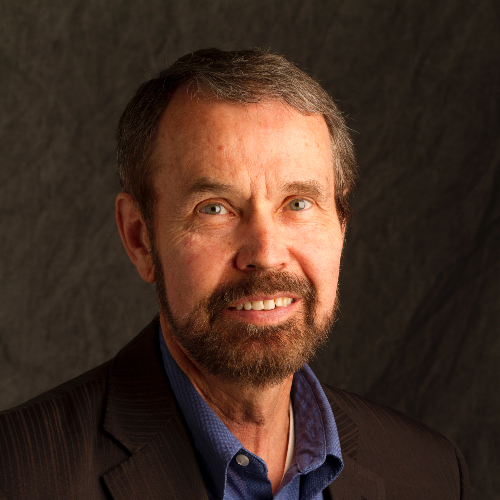
By Richard M. Davidson, PhD
Senior Research Professor of Old Testament Interpretation
Seventh day Adventist Theological Seminary, Andrews University

Reveling in Christmas Lights
I revel in the lights of Christmas! This afternoon I came home and put up our Christmas lights decorating the entrance to our house. Tonight our whole local Adventist community here at Andrews University is being dazzled by the annual Academy-sponsored “Feast of Lights.” Along with enjoying the beautiful music, those who attend are each year held spellbound by the lights of this service: the luminarias outside the church lining the sidewalks; the light of the Star over the manger scene, the Academy students surrounding the church sanctuary holding lit candles and singing “Silent Night, Holy night, Son of God, Love’s pure light. . .”
If I were forced to eliminate all types of Christmas decorations but one, I could forego the tree, the tinsel, and Christmas balls, the snowflakes, and many other things, but I would keep the lights! Somehow for me the holiday lights capture the essence of Christmas.
Not all Seventh-day Adventists share this love of the lights of Christmas. When I travel to campmeetings or to weekend seminars at local churches, I often encounter those well-meaning and conscientious Adventists who decry the fact that SDA’s celebrate Christmas at all, with its Catholic origin depicted even in the name–“Christ Mass.” Every one knows, as they say, that Christ was not born at this time of year. They are especially appalled by the lights, reminding of Catholic candles and secular commercialism, and ultimately rooted, as they are quick to point out, in the winter-solstice light festival of pagan Rome.
Now, in the past I’ve been satisfied to answer these sincere opponents of Christmas celebration with the kind of argumentation used by Ellen White (see Adventist Home, 477-483), to the effect that since society has traditionally celebrated the birth of Christ at this time of year, it is not inappropriate to take this opportunity to join in honoring the birth of Jesus, if it is done in the right spirit, with Jesus at the center of our celebration.
In the last few years, however, I have become increasingly aware of what I consider a supplementary, and perhaps in the current climate even more effective, answer to these contemporary questions regarding Christmas celebration in general and of the use of Christmas lights in particular. What I suggest to them, and share with you this evening, is what I’ve found to be for me a powerful reason to celebrate the incarnation of Christ at this very time of year, and a potent explanation of why Christmas lights indeed capture the heart of this celebration! I’ll call this “The Other Christmas Story.”
The Other Christmas Story
During the Christmas season, we usually focus upon the Bible stories connected with Christ’s birth as found in Matthew and Luke: the accounts of the shepherds (Luke 2) and the Wise Men (Matt 2). The “other Christmas story,” not nearly so often referenced at Christmas time, is found in the Gospel of John. [Read John 1:1-5, 9, 14.] The emphasis of John’s Prologue is upon Christ’s incarnation: “The true Light, which enlightens everyone, was coming into the world” (vs. 9, ESV and most modern versions).
But before we focus more upon this passage, let me invite you to imagine a typical winter holiday scene here in the American Mid-west (Michigan, to be more precise). It is December, the 25th day of the month, snow is whirling outside, the lights that decorate the house are sparkling on the new-fallen snow, the family is gathered together to celebrate the reason for the season, with wonderful holiday culinary delicacies, and the joyous exchange of gifts and cards. Can you imagine the scene? As gifts are being opened, family members turn to one another and give a hearty holiday greeting—Happy Hannukkah! That’s right, I wasn’t describing what happens in a Christian home at Christmas time, but what takes place in a Jewish home at the Feast of Hanukkah, also called the Feast of Lights. If I had added to my description two more items in the celebration, the Hanukkiyot and the Dreidel, you would have known the difference. But there are many similarities between the two holidays. Both come in December, and both come the 25th day of the month, Christmas the 25th of December, and Hanukkah the 25th of the month of Kislev on the Hebrew calendar. Often the 8 days of Hanukkah overlap with Dec 25, and sometimes, like this year, they come earlier, during the first part of December. This coming Sunday night at sundown starts the first day of Hanukkah.
Now what does the Feast of Lights have to do with John 1, and the “Other Christmas Story?” I’d like to suggest that the Bible and historical evidence from the time of Jesus give us clues regarding when Christ became incarnated as the True Light, and that this happened at the time of Christmas and Hanukkah.
When Did Christ become Incarnated as the Light?
I do not think we can know for sure the exact date on the calendar for Jesus incarnation, and probably for good reason, but I believe that Scripture and history gives us some very good clues so that we may know at least the approximate time of year.
I’ve summarized this evidence elsewhere [you can go on my website (https://andrews.academia.edu/RichardDavidson or the Andrews digital commons: https://digitalcommons.andrews.edu/auss/vol44/iss2/1/ to read my published Christmas homily, “Christmas Festival of Lights, Andrews University Seminary Studies 44.2 (2006): 197-201)].
But here is a quick survey of the most pertinent data. The biblical evidence is concentrated in two chapters, Luke 1 and 1 Chronicles 24, and this is augmented by evidence from the Jewish Mishnah or Talmud incorporating what well may be eye-witness accounts of actual Temple practice in the time of Jesus.
From Luke 1 we learn that Zechariah, father of John the Baptist, was priest after the order of Abijah (vs. 5), and he was serving in the Temple “when his division was on duty” (v. 8). 1 Chron 24 indicates that there were 24 courses (or divisions) of priests, and that Abijah was the eighth course (vs. 10). At the time of Second Temple Judaism (first century AD), all courses of priests served at the Temple during the three major festivals (Passover, Pentecost, and Tabernacles), but otherwise, priests served in turn by courses, each course for one week (from Sabbath to Sabbath), starting the cycle in the Spring at the beginning of Nisan, the first month of the Jewish year (Talmud, Suk. 55b; cf. 1 Chron 27:1, 2), which usually occurred in early in April.
If the divisions of the priesthood began serving the first Sabbath of the Jewish New Year, in early April, two divisions would serve before Passover, all priests would serve during the week of Passover, and six more would serve before Pentecost. Thus the division of Abijah, of which Zechariah was a part, would have served just prior to Pentecost, which usually occurred sometime during the first part of June.
During the time of Zechariah’s service in the Temple, the angel Gabriel told the aged priest that when he returned home his wife Elizabeth would become pregnant. Because the time following Zechariah’s regular service period was Pentecost, when all divisions of priests were to serve, he would not have returned until after Pentecost, or approximately the latter part of June. Luke tells us that
“as soon as the days of his service were completed [approximately the second or third week of June], that he departed to his own house” (v. 23) And according to the next verse, “after those days [NIV: soon afterward] his wife Elizabeth conceived” (vs. 24). This would probably imply that Elizabeth became pregnant right after Zechariah came home, sometime toward the end of June.
What does all this have to do with the incarnation of Jesus? Luke 1 continues with the record (vss. 26, 36) that Mary became pregnant six months after Elizabeth. This brings us approximately the last part of December, according to our calendar. That’s Christmas time! Thus I suggest that Dec 25 is approximately the right date, but we have had the wrong event! Instead saying to each other “Merry Christmas!” we should shake hands and rejoice with the words, “Merry [or Mary!] Conception Day!”
Actually, the event we traditionally celebrate on Dec 25 is not all that far off the mark either. Both Jesus’ conception and birth are part of His incarnation, His “becoming flesh.” If the above reconstruction is correct, I suggest that Jesus’ incarnation began with His conception at Christmas time, and climaxed with His birth at Feast of Tabernacles time about the end of September. (More on the precise chronology later in this paper.) But this leads to the second main question for us to consider in this study: what is the connection with light, and with the other Christmas story in the Gospel of John? I suggest that the Jewish Feast of Lights provides the crucial link in seeing the connection.
What is the Light Connection?
Long before it became a Roman pagan winter-solstice festival in the first century AD, Christmas time already constituted a well-established Hebrew holiday: the Feast of Lights, otherwise known as Hanukkah (“Dedication”). On the 25th day of the Jewish month Chislev, the darkest day of the calendar year, in the year 168/7 BC, the Selucid king Antiochus Epiphanes (the “Illustrious,” but nick-named “Epimanes”–the “Madman”) conquered Jerusalem and desecrated the Temple, stopping the regular ceremonies and offering swine’s flesh on the altar of burnt offering, and sprinkled its blood in the Most Holy Place. But exactly three years later, on the 25th of Chislev in 165/4 BC, Judas Maccabees (“The Hammer”), having won a stunning victory over the much larger Selucid army, came to Jerusalem, and reconsecrated the Temple, restoring the services of the holy place (See 1 Macc 4).
In that year, 165/4 BC, on the darkest day of the year (25 Chislev), at the darkest time of Jewish history, came the Miracle of the Light. As the story goes, only one bottle of the consecrated lamp oil was found to light the Temple Menorah, and the oil from this one bottle, which normally lasted only a single day, continued to burn for eight days until more oil could be manufactured and consecrated. Hence, the Feast of Hanukkah (Dedication) also became known as the Feast of Lights.
Some 160 years later, at the darkest time of human history, and at this very same time of year, probably during the Feast of Lights, came the Greatest Miracle of Light. Picture it: in the words of Psalm 40:6-8, as exegeted in Hebrews 10, the pre-existent Christ, the King of the Universe, calls out from His heavenly abode, just as He is about to “come into the world” (Heb 10:5): “Lo, I come!” And the next instant, He who had created countless galaxies and nebulae, becomes flesh, a single cell in Mary’s womb, the Light of the world! John 1:9, 14 captures this Light connection, by indicating that the One coming into the World, the One becoming flesh, was the Light of the World.
It appears to be no accident that John connects the theme of Jesus incarnation (becoming “one flesh”) with Light, because, I suggest, he is aware that historically Jesus is conceived at the time of Feast of Lights. Further confirmation that John consciously connects Jesus’ incarnation with the Feast of Lights is found in John 10, where the apostle carefully records that at the time of Dedication (=Hanukkah) (vs. 22) Jesus Himself alludes to His incarnation (vs. 32, “coming into the world”) and thus announces Himself in His incarnation as the fulfillment of the Hanukkah typology.
The Hanukkah - Christmas Connection:
We can calculate the exact date in our calendar when the temple was rededicated on the 25th day of Chislev in 165 BC. it was December 24—Christmas eve!
Furthermore, in the year 5/4 BC, the most probable year for Jesus’ incarnation, the first day of Hanukkah (when calculated according to the astronomical new moon that month), came exactly on December 25! Hence in the year of Jesus’ incarnation, Hanukkah and December 25 precisely converge on the same day! This rarely happens in the Hebrew calendar.
How does this all relate to us?
First of all, I hope this study has shown us that celebrating Jesus’ incarnation at this time of year is not such a bad idea! It is in fact very biblical! It is not “pagan” in origin, but built solidly upon the typology of Hanukkah in the Gospel of John! We need not be ashamed to celebrate the incarnation of Jesus at Christmas/Hanukkah time.
Secondly, we might consider paying more attention to “The Other Christmas Story” rooted in the Feast of Lights and described in the Gospel of John. This Sabbath (2007) we are right in the middle of the eight days of Hanukkah, Feast of Lights. The Jewish people celebrate this Festival by lighting a special nine-branched menorah, called a hanukkiyot (demonstrate). Now, I don’t expect to find many takers to the suggestion that we might merge the traditions of Hanukkah and Christmas, to light a Hanukkah lamp in our homes as well as trim the Christmas tree, although I think it would be a great idea (and our family sometimes does this). But I do invite you this year, as you celebrate Christ’s incarnation with family and friends around a lighted Christmas tree, as you string the lights outside or enjoy the light displays of neighbors’ houses, that you remember “The Other Christmas Story”– celebrate Christ’s incarnation as the True Light!
Thirdly, I invite us to focus this year upon one particular lesson of the other Christmas story. We have noted that the Miracle of the Hanukkah light came at the darkest period of the year, the darkest moment in Jewish history. And the incarnation of Jesus as the Light of the World likewise began with His conception at the darkest time of year, the darkest period of earth’s history. This Christmas season may find some of our church family and others in the wider community in a season of darkness. We may have children or other relatives out of the faith, sickness, deaths in the family, financial struggles, estrangement between family members, personal tragedies.
But I have determined that in this time of family darkness, I will invite the Light of the world to dispel the shadows, bring spiritual Light and life.
And I invite each of you to contemplate the “Other Christmas Story,” the one in the Gospel of John, about Jesus’ incarnation, in His coming into the world, to bring the Light of life to us all! Let each Christmas (or Hannukkah) light, help us capture the essence of Christmas, the coming of Immanuel, the Light of the World, to dispel the darkness and bring life!
Let us sing in honor of our True Light: “Silent Night, holy night, Son of God, love’s pure Light. . .” May the Light of Christmas illuminate our hearts this season and always!
AMEN!
Dr. Richard M. Davidson has served on the faculty of the Andrews University Theological Seminary since 1979, where he teaches Old Testament interpretation and biblical theology. He is passionate about helping Scripture come alive and pointing readers to Christ through the full witness of the Bible.
Email: davidson@andrews.edu

Comments