
Submission, Islam, and Christianity

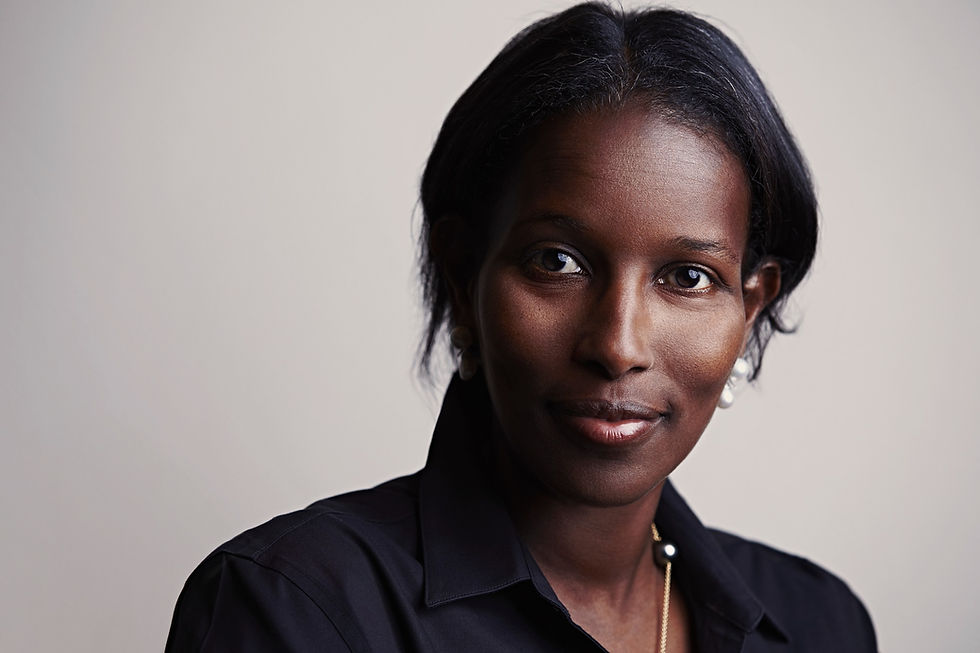
I have just read the last few words of the book Infidel by Somali-born writer and public intellectual Ayaan Hirsi Ali. The book is her journey from Islam to Atheism. Good news—she has recently embraced the Christian faith, so she’s no longer an atheist. But I think the atheistic segment of her journey needed to happen. It served as a palate cleanse from toxic religion.
Let me explain.
Ayaan grew up in a Muslim household, the daughter of a Somali political opponent. Her father’s activism threw the family into exile in Saudi Arabia, Ethiopia, and Kenya before they returned to Somalia briefly when Ayaan was a young adult. At 23, her father attempted to force her into an unwanted marriage, leading her to escape and seek asylum in the Netherlands where she eventually studied political science and became a parliamentarian.
In the Netherlands she began to speak out about female oppression in Muslim communities. The country had welcomed many refugees from Islamic regions, some of whom continued their practices. Ayaan documented cases of Muslim immigrant women facing honor killings, forced marriages, and domestic abuse.
Ayaan herself had suffered female genital mutilation at five years old as well as other abuses under Sharia law. Ultimately her activism resulted in a life in hiding after an Islamic radical killed her friend Theo Van Gogh. Ayaan and Theo Van Gogh had published a short film, Submission, criticizing the treatment of women in Islamic societies. The killer left a letter accusing Ayaan of “terrorizing Muslims and Islam” stabbed to Theo’s chest.
My purpose here is not to merely rail on Islam, but rather to ask a larger question—how does a religion arrive at a place where it promotes such insanity? Because the truth is that my own religion, Christianity, has been guilty of the same. Forced marriages and honor killings, as well as other atrocities, have occurred under the banner of the Christian faith. What toxifies religion, even Christianity? Or the better question may be, what makes a religion pure?
The answer to the latter is the gospel. Specifically, the central teaching of a God sacrificing Himself for humanity, as opposed to humans sacrificing themselves for a god. When the self-giving love of God remains at the center of the Christian faith, its influence salts the earth with goodness.
Islam doesn’t have a Savior God on a Cross. Christianity does, but we so often ignore and even deny Him. In any case, a crossless faith leads to a sick religion. God’s holiness and power may be uppermost in the minds of adherents, but they remain strangers to His love. God’s self-giving love provides a forcefield of protection against religious bigotry.
Ayaan had tried hard to be religious, spending periods of her childhood as an observant Muslim in a hijab. She explains:
In Islam . . . the relationship of the individual to God is one of total submission, slave to master. To Muslims, worship of God means total obedience to Allah’s rules and total abstinence from the thoughts and deeds that He has declared forbidden in the Quran.
Now I arrive at why I believe Ayaan may have needed to become an atheist before she could embrace the gospel. When our concept of God is sufficiently warped, we must sometimes reject god to find God. She’d served a holy, powerful, loveless God. She ultimately traced a line from that view of God to the oppression and violence she saw in Islam.
I made a similar, although less-dramatic journey. My early Christian experience in a cultlike ministry group was similarly characterized by the slave-to-master dynamic. Intent upon holiness, I ended up skeletal from fasting. After running for my life (spiritually speaking), I reassessed my faith experience, only to realize that it had become works-centered, and not gospel-centered, and that I myself needed a palate cleanse.
Islam means “submission.” And there’s nothing wrong with submission. The suspension of our defenses in response to deep trust in God is one of the most beautiful experiences a believer can enjoy. But if the god to whom we submit has no love, the submission will always be one of craven fear. And it will seep into every relationship, whether familial, religious, or societal.
If our Christian experience consists only of fevered attempts to be holy enough for God, and to abjectly subjugate ourselves to Him out of fear, we are no different than Ayaan Hirsi Ali in her hijab praying five times a day. And we will end up where she did—viewing a godless existence as preferable to living under the sovereignty of a tyrant. When religion becomes bondage, irreligion looks like freedom.
But keeping the self-sacrifice of Christ at the center of our faith, religion serves its true purpose. In God’s economy, sacrifice precedes submission. We yield to the one who has made the ultimate sacrifice for us. At the center of Islam is Allah, a god demanding submission. At the center of the gospel is Jesus, a God submitting to the Cross. Which kind of submission do you want at the center of everything?
Log in to leave a comment


Comments