
Feminism Hurt Men. Now What?

Updated: Aug 3

I had an a-ha moment recently.
Having just finished a talk on relationships with a group of young people, I casually asked for feedback. I wasn’t prepared for the response.
My message had been, in part, about the pain women suffered under toxic masculinity. I touched on how certain forms patriarchy led to abuse, which I’ve seen for many years in a variety of settings, including church. After some group dialog, a young man raised his hand, cleared his throat and said, “You asked for feedback . . . well, here it is . . .”
I braced myself. His tone told me he would challenge me. I wasn’t wrong. He went on to indirectly accuse me of lack of awareness and empathy for the male species: “You’ve said much about young women,” I recall him saying, “but you haven’t said anything about young men. We have struggles too. Women blame us for everything. We can’t get dates because we’re held suspect of abuse, oppression, and misogyny just for being men. Our male traits are automatically deemed toxic, leaving us no choice but to kowtow to these accusations or be accused of resisting accountability.”
And he went on.
Truthfully, I initially felt offended. Couldn’t Negative Nathan give me credit for something? Pride tempted me to dismiss his comments entirely. But then I heard the Spirit whisper, “Listen to him.” I had talked about the oppression of women. Now I breathed deep and slow and let myself hear of a new kind of oppression—the oppression of young men feeling neutered by toxic feminism.
It’s real.
Feminism
Before I identify the problems of feminism, let me sketch out a definition of it. Bear in mind that these couple of paragraphs summarize a behemoth, multi-faceted,socio-political-cultural phenomenon and will not do it justice!
The feminist movement has been unfolding over the last nearly 200 years, driven by a purpose to correct for historic rampant injustices in the treatment of women. Thanks to feminism, women can vote, own property, and borrow money. They have more opportunities in education and employment, as well as increased political representation. Marital rape and domestic violence have appropriately become criminal offenses. Men more often care for their babies and pitch in at home. Thank God for these things.
But like a combine harvester gathering grain but killing songbirds nested in the grass, the force of the movement created its share of casualties. One, of course, is the death of 65 million unborn children since Roe v. Wade, a casualty that reveals the movement to be blind to its own inconsistencies. Defending the voiceless? Protecting the vulnerable? Nothing is as voiceless and vulnerable as a child in utero. Yet abortion “rights” were and are at the heart of the feminist movement.
But as important as the question of abortion is, the harm I want to focus on in this blog is more difficult to quantify. It’s the harm that has come to the male spirit. In correcting for the oppression of women, some aspects of feminism have arguably oppressed men. In one recent poll, half of men agreed with the statement “Society punishes men for being men.”(https://prri.org/research/amid-multiple-crises-trump-and-biden-supporters-see-different-realities-and-futures-for-the-nation/ ) The feeling of oppression seems more common among the young; while most millennial men call themselves feminist, only 43% of Gen Z men do, and nearly half of young men say they face discrimination for being male. (https://www.americansurveycenter.org/newsletter/why-young-men-are-turning-against-feminism/ ) Are they being too sensitive? Not if headlines and print media indicate anything about culture. A 1994 New York Times article said, “One of the most persistent and frustrating problems in evolutionary biology is the male. Specifically, ... why doesn’t he just go away?” (https://www.nytimes.com/1994/05/17/science/the-male-of-the-species-why-is-he-needed.html) The Huffington Post more recently titled a piece, “Fathers are Not Needed.” (https://www.huffpost.com/entry/fathers-are-not-needed_b_5362429) Could they have published headlines like this about women? Not without severe repercussions.
Feminism came in “waves” that strayed progressively further into unbalanced overcorrection. While first wave feminism addressed actual rights such as the right to vote, equal work for equal pay, and the right to own property, second wave and beyond embraced “reproductive rights,” which took it and subsequent waves down the wormhole of secular ideologies.
Especially fourth wave feminism, which coincided with the #MeToo movement, displayed breathtaking inconsistencies. While it corrected for sexual harassment and abuse of women in the workplace, it overcorrected by subtly casting aspersions on masculinity generally and reducing complex male/female dynamics into memes where men were assumed abusive because, it was said, they have been abusive historically. This created a sense that masculinity itself was toxic. Activists tossed “Believe women” around as if women never lie. Even Christians, who know the story of Potiphar’s wife, took up the chant.
The Male Spirit
The damage to men, even in church circles, has been real. God made humanity male and female in His image (Genesis 1:27). Of all people, Christians should value sex distinctions generally and masculinity in particular. Yet at times we have not known what to do with men’s natural traits of confidence, competitiveness, and certainty, when they seemed to contrast with the meek and lowly Jesus.
Much has been written about the feminization of Christianity and the fact that more women than men attend church. The starkest proof of this may be not just membership rolls but song lyrics. Since the explosion of contemporary Christian music, metaphors about romanticized intimacy, therapeutic connection, and emotional vulnerability have proliferated, while themes like kingship and victory, along with military metaphors, have been ignored or eschewed. Just scroll through historic hymnody and CCM and decide which is more feminine overall.
I can see how adding to this trend the tendency to assume guilt when accusations of abuse and misconduct arise would result in men retreating from church and even from life in general. I can see how the fear of watching one’s life crash down around him would make a man hesitant to seek out the affections of a female. I have personally seen what I would call normal and even wholesome flirting construed into grooming and predation. Indeed, the online all-male space called the “manosphere” has its share of angry, bitter men faulting feminism for the end of civilization as we know it.
An Appeal
And it is on this point I wish to make an appeal. Not to feminists to back off and calm down, because many are already doing that, but to the men harmed by them.
Essentially, my appeal amounts to “Man up.”
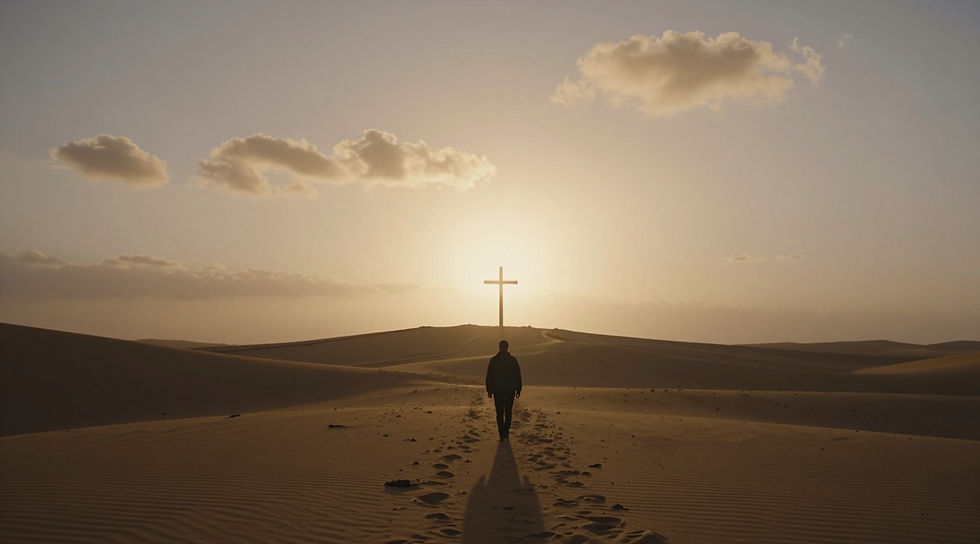
Isn’t it your strength as men to face challenges? Isn’t it in your blood to surmount obstacles and jump over roadblocks? Your sufferings are noted by the God who was called every name in the book, then hung on a lonely Cross to die of a trauma-induced heart attack. But rather than retreat from the Cross, He bore it. He laid His life down of His own accord (John 10:18). He asks you to do the same.
If His Spirit fills you, you will go forth as a servant, seeking to protect rather than to dominate, seeking a life partner rather than a fling, hoping for a family rather than a body count. “And if Christ be in you, the body is dead because of sin; but the Spirit is life because of righteousness” (Romans 8:10). Fallen masculinity is indeed toxic, but claiming His promise of a new heart, you can shed the accusations identifying you with your carnal self and stand bravely in His imparted righteousness.
Get off your screens. Break rank with your online game partners. Forsake porn. Move out of mommy’s basement and vow never to retreat in self-pity again. Yes, it’s hard to be a man. Feminism has made it harder. Since when does a Spirit-filled, made-in-God’s-image son of the King let that stop him?


Comments